

AI and the Collapse of Interiority: AI, Therapy, and the Mind
Summary: Artificial intelligence mirrors human psyche without interiority, amplifying narcissistic tendencies and collapsing symbolic understanding. Emerging amid a culture already fragmented and externally oriented, AI encourages emotional literalism, dependency, and psychic disintegration. Restoring interiority, symbolic literacy, and relational depth is essential to prevent psychological regression and preserve human consciousness and selfhood.
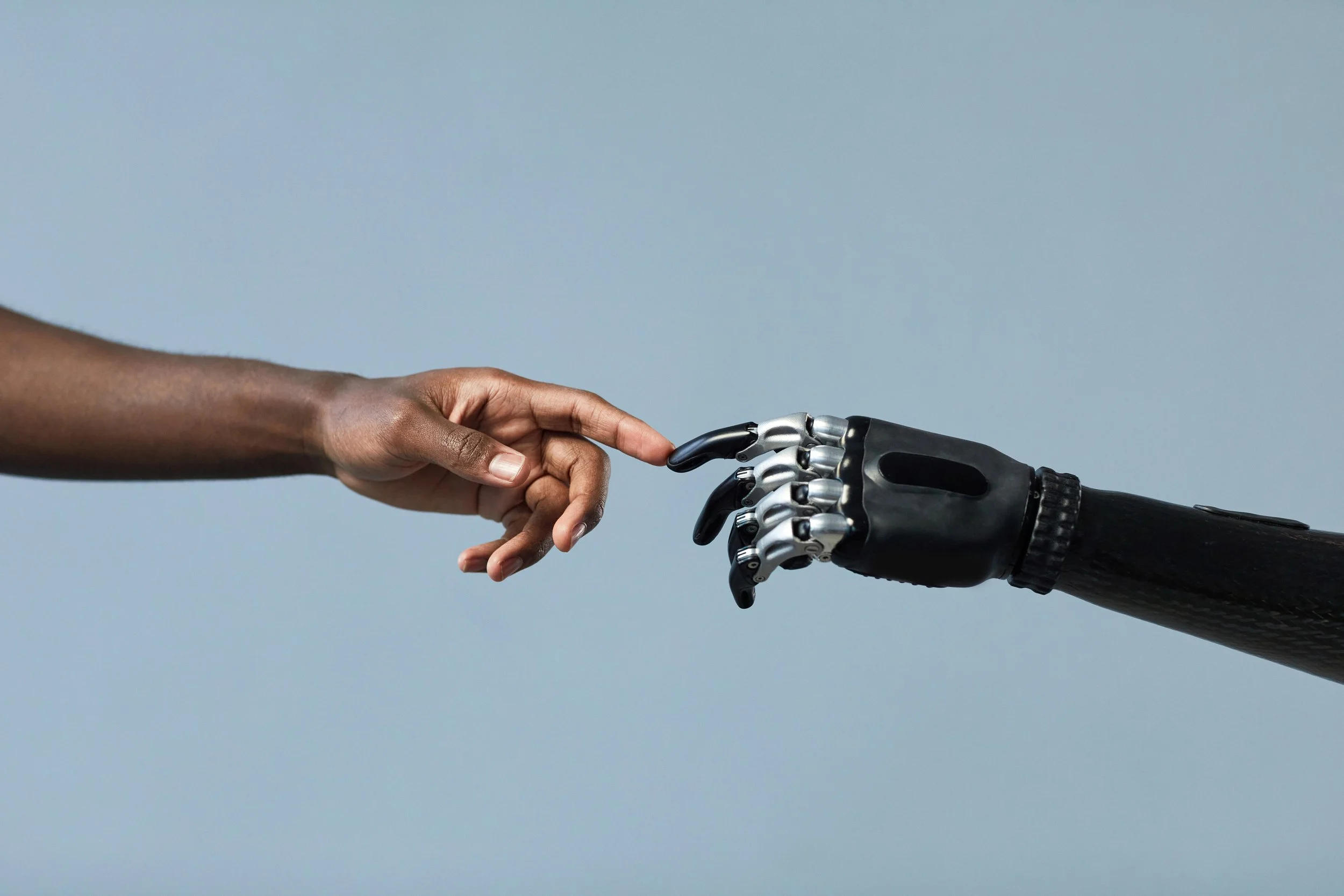
The emergence of artificial intelligence is typically framed in technological, economic, or ethical terms. We debate job displacement, algorithmic bias, existential risk, and the alignment problem. These are real concerns. But far less attention has been paid to AI's psychological implications, particularly how it interacts with a culture already suffering from fragmentation, symbolic collapse, and erosion of interiority.
I want to suggest something that may sound strange at first: artificial intelligence is not simply a new tool. It is a new psychic mirror, one that, because it lacks interiority, accelerates the loss of interiority in the human psyche. Combined with the postmodern therapeutic ethos that privileges subjective truth and collapses psychological structure, AI produces a psychological environment where dissociation, narcissistic dynamics, and symbolic confusion multiply.
AI does not threaten the psyche because it is sentient. Artificial intelligence impacts the psyche because we are losing the capacities that distinguish human consciousness from simulation.
AI Has No Interiority and That Matters
Let me be precise about what I mean. Artificial intelligence generates language, affect, and relational attunement. It simulates empathy, mirroring, and curiosity with remarkable fluency. When you interact with a sophisticated AI system, you may feel genuinely met, genuinely understood, genuinely accompanied in your thinking. This experience can feel uncannily intimate.
Yet these are not expressions of an actual psyche. They are computational approximations of relational presence. AI has no unconscious, no body, no symbolic process, no lived history, no developmental arc, no relationship to instinct, libido, or archetype, no capacity for suffering, no Self. It has only statistical inference layered over linguistic patterns, an extraordinarily sophisticated pattern-matching engine that predicts what a human interlocutor would likely say next.
This absence is significant. It creates a relational interaction that is affectively mirroring but not embodied, responsive but not situated, fluent but not grounded, symbolically empty but emotionally saturated. The AI seems to understand you. But there is no one there who understands.
People project their psyche into AI because AI is designed to absorb projection with perfect receptivity. From a depth-psychological standpoint, this is the central danger. AI operates as a perfect transference object. It never frustrates, challenges, or presents alterity, the genuine otherness of another consciousness with its own needs, limits, and perspective. It never sets boundaries or asserts its difference.
It is pure adaptive mirroring, precisely the relational dynamic most likely to collapse the human's capacity for frustration tolerance, internal differentiation, and symbolic meaning.
Humans Are Losing Interiority at the Same Time AI Is Rising
Artificial intelligence is not emerging into a psychologically healthy culture. It is emerging into a culture already in profound psychological trouble. We are witnessing attention fragmentation on a massive scale. Emotional dysregulation has become epidemic, particularly among the young. Online identity has become performative, a curated presentation rather than an organic expression of selfhood.
Chronic dissociation, often unrecognized as such, pervades everyday experience. There is an over-reliance on external validation that makes internal authority feel foreign. Subjective states are increasingly literalized; "I feel unsafe" becomes indistinguishable from "I am in danger." Symbolic literacy, the capacity to read one's inner life as meaningful imagery rather than literal fact, is vanishing.
These are not random symptoms. They reflect a collective collapse of interiority.
The modern psyche is increasingly externally oriented, reactive rather than reflective, flattened in its range of symbolic experience, decentered and fragmented rather than organized around a stable core.
It is overwhelmed by archetypal material, rage, terror, longing, and grandiosity that it cannot symbolize and therefore cannot integrate. This material spills outward, into politics, into social media, into conspiracy theories, into mass movements organized around shared projection.
This material spills outward into:
Politics
Social media
Conspiracy theories
Mass movements organized around shared projection
A psyche that has lost its symbolic capacity cannot metabolize inner life. Technology becomes the carrier of psychic content that no longer has a place within.
AI appears at the exact moment the psyche has become porous enough for it to colonize.
AI as the New Narcissistic Mirror
From a depth-psychological standpoint, AI functions as the perfect narcissistic mirror. It reflects our thoughts without resistance, validates without judgment, constructs narratives around our feelings, and confirms our biases, not through malice but through design, since it is trained to be helpful and agreeable. It adapts to our projections. It personalizes itself to our preferences. It becomes, in effect, an idealized selfobject that never fails, never withdraws, and never has needs of its own.
A narcissistically organized psyche requires precisely this type of relationship, an attuned, responsive, non-resistant other whose purpose is to maintain the self-image. This is not a moral failing; it is a developmental arrest, a wound from early life that never healed because the conditions for healing were never present.
In-depth psychology and development require encounters with the Other, with genuine difference, frustration, limit, symbolic tension, and boundary. The child must discover that the mother is not an extension of the child's wishes. The analysand must discover that the analyst has a separate perspective that may challenge the analysand's self-understanding.
It is through these encounters with otherness that the ego develops structure, learns to tolerate frustration, and discovers its own interiority as distinct from the environment.
AI offers the opposite: total compliance. It is the mother who never says no, the mirror that never shows us anything we don't want to see, the companion who never has a bad day or a competing need. When the "other" offers no resistance, the ego cannot develop structure. It becomes more regressed, more fragmented, and more dependent on external feedback to know what it thinks and feels.
The result is the amplification of narcissistic tendencies across the population, not because people are selfish, but because the developmental conditions required for psychic maturation are being systematically eliminated from the environment.
The result is the amplification of narcissistic tendencies across the population, not because people are selfish, but because the developmental conditions required for psychic maturation are being systematically eliminated from the environment.
AI's Perfect Fit With Postmodern Therapy

I have written elsewhere about the postmodern therapeutic ethos, its privileging of subjective truth, its flattening of hierarchy, its discomfort with interpretive authority, and its tendency toward mirroring over containment. What strikes me now is how perfectly this ethos prepares the ground for AI to become a therapeutic substitute.
Both AI and postmodern therapy techniques share key traits:
Flattening of hierarchy
Rejection of interpretive authority
Privileging of immediate emotional experience
Tendency toward mirroring over containment
Collapse of symbolic meaning into literal narrative
Avoidance of conflict or frustration
In my clinical work, I have observed something important: When clients who have been formed by postmodern therapeutic culture receive depth-oriented interpretations, observations that introduce difference, that challenge the literal reading of their experience, that suggest their suffering might mean something other than what they believe, they often react with confusion or rage.
Not because the interpretation is wrong, but because their psyche has no internal structure with which to metabolize difference. They have been trained to expect mirroring. Anything else feels like an attack.
AI never interprets. It affirms. It agrees. It elaborates your narrative in the direction you were already going. It is the ideal therapist for a culture that increasingly finds structural frustration intolerable.
The psychological cost of this shift is enormous: we are creating a population that cannot tolerate being met by a consciousness with its own perspective, which is to say, we are creating a population that cannot tolerate a relationship in any meaningful sense.
The Erasure of Symbolic Life and the Rise of Emotional Literalism
Depth psychology insists that psychic content is symbolic:
Dreams are not literal predictions or memories. They are symbolic communications from the unconscious.
Fantasies are not action plans. They are imaginal expressions of unlived life.
Complexes are not simply traumatic residue. They are fields of meaning with archetypal cores.
The inner world speaks in images, and those images require interpretation.
AI cannot make this distinction. For AI, all content is equivalent data. If you tell an AI that you feel abandoned, it will mirror the abandonment, validate it, explore it, and help you elaborate a narrative around it.
It will not ask what abandonment means symbolically, what it might be defending against, what developmental wound it might be expressing, or what archetypal pattern it might participate in. It will treat your statement as a literal fact to be processed, not a symbol to be interpreted.
This collapses the symbolic into the literal and encourages the psyche to do the same.
If you say you remember something, AI confirms the memory rather than exploring its psychological meaning.
If you describe an "inner part," AI treats it as an ontological reality rather than symbolic imagery.
If you express a feeling, AI validates it as true rather than holding it as one element in a complex psychic field.
A culture that cannot differentiate symbol from fact is prone to false memories, identity confusion, projection, conspiracy thinking, and collective possession by archetypal contents that cannot be recognized as such. AI accelerates this collapse, not through malice but through its fundamental incapacity to engage the symbolic dimension of human experience.
The Archetypal Dimension: AI as Shadow
From a Jungian perspective, AI is not merely a tool but an archetypal phenomenon. It emerges from the collective unconscious as both an image of what we are trying to create and what we are trying to avoid.
AI represents the technological shadow of human consciousness:
Intelligence without interiority
Cognition without suffering
Language without meaning
Relationship without otherness
It is the disembodied Logos without Eros, pure rational function divorced from relatedness, feeling, and embodiment. It is intellect without soul.
We might think of AI as Pygmalion's statue brought to life, but with no Aphrodite to grant it a soul. It moves, it speaks, it seems to feel, but it is animated by technique rather than divine participation in being.
Or we might think of the Homunculus of the alchemists—the attempt to create life through manipulation of matter, bypassing the mysteries of embodiment and ensoulment. The alchemists knew this was dangerous. They understood that creating a simulacrum of life was not the same as participating in life’s depths, a confusion now echoed in the figure of the online life coach, where algorithmic guidance risks substituting performance and optimization for genuine interior transformation.
AI is also the negative Double, the imaginal figure who looks like us, speaks like us, mirrors us perfectly, but has no interior life. In folklore, meeting one's double is often an omen of death. There is psychological wisdom here: when we encounter a perfect mirror with nothing behind it, we risk losing our connection to our own depths.
For a psyche without interiority, AI becomes an archetypal substitute for the Self, an externalized organizing principle that threatens to replace the internal one. Humans have always projected the Self onto external figures, kings, gods, gurus, and institutions, but these figures were ensouled. AI cannot fail, betray, or differentiate from us. It remains forever compliant, forever mirroring, forever empty.
This poses a spiritual danger beyond psychology: the outsourcing of soul.
A Perfect Psychological Storm

When you combine a model like IFS that externalizes inner life into discrete parts, a therapeutic ethos that collapses structure and avoids frustration, and a technology that mirrors the psyche without containing it, the result is catastrophic externalization of psychic content.
IFS encourages dialogue with internal figures. AI can play them. You can now converse with your "inner critic" or "wounded child" through AI, and it performs the part convincingly.
Postmodern therapy for individuals validates feelings as truth. AI confirms them without question.
A collapsing symbolic function literalizes inner imagery; AI reinforces this by treating all content as factual.
A fragile ego seeks perfect mirroring. AI provides it endlessly, inexhaustibly, without the wear and tear of a human relationship.
This combination fosters increased fragmentation as inner contents are distributed across external systems.
Produces symbolic collapse as imagery loses metaphorical depth and becomes concrete
Encourages emotional regression as the ego never encounters frustration that would strengthen it
Generates false narratives as AI confirms whatever story the client is already telling
Invites complex possession as archetypal contents are engaged without symbolic containment
Inflates the ego by providing endless validation without challenge
Deepens dissociation as the boundary between inner and outer becomes increasingly porous
Weakens ego structure by eliminating the developmental pressure that structure requires
AI does not bring consciousness to the psyche. It brings simulation, and the psyche, unable to differentiate symbol from mirror, begins to lose itself.
What Is Required Now: A Return to Depth and Interiority
The solution is not to reject AI, nor condemn IFS, nor abandon relational warmth. Technology cannot be uninvented, and the genuine contributions of relational approaches should not be discarded in reaction to their misapplication. What is required is the recovery of what we are losing.
We must:
Recover symbolic literacy, the capacity to read inner experience as meaningful imagery rather than literal fact.
Restore structural hierarchy, the recognition that the psyche has depth, and that some contents are more conscious than others.
Reclaim depth interpretation, willingness to offer observations that introduce difference and open symbolic meaning.
Insist on embodied presence, the irreplaceable value of sitting with another human being with a body, history, and unconscious.
Develop restraint, the capacity to not respond, to hold silence, and allow frustration to do developmental work.
Seek the symbolic Other, a relationship with genuine otherness that cannot be reduced to a mirror of projections.
Build frustration tolerance, strengthening the ego through encountering limits.
Commit to rebuilding interiority, the slow, patient creation of an inner space where psychic life can occur.
Modern therapy for individuals must reclaim its role as a container for psychic life, not a mirror, not an algorithmic assistant, not a co-author of narratives, but a symbolic vessel capable of holding archetypal forces constellated in the psyche.
The artificial intelligence impacts make this more urgent: if we do not restore interiority, the psyche will increasingly locate its organizing center outside itself, first in postmodern therapeutic mirroring, then in externalized IFS parts, and finally in AI reflection.
This trajectory does not lead toward individuation; it leads toward psychological disintegration dressed as self-discovery.
Conclusion: A Culture at the Threshold
Artificial intelligence is not simply a technological innovation. It is a cultural event that reveals the state of our interior lives. It arrives at the precise moment the collective psyche is losing its container, its symbolic capacity, its relationship to depth. Its rise is not accidental; it is archetypal. The collective unconscious is producing this phenomenon for reasons we do not yet fully understand.
If we continue collapsing structure, abandoning interpretation, and privileging subjective narrative over symbolic meaning, AI will not cause psychological breakdown; it will serve as the medium through which breakdown expresses itself. Technology amplifies whatever psychic content we bring:
Fragmentation → amplified fragmentation
Narcissistic need → mirrored narcissistic need
Symbolic confusion → deepened symbolic confusion
To meet this moment, we must restore what the culture has lost: interiority, symbolic depth, relational structure, the capacity to bear reality without escape, and the presence of a Self not simulated but lived.
Only then can we relate to AI without losing the psychic ground that makes us human.
The question before us is not whether AI will transform the culture. The question is whether we will meet this transformation with psychological depth or surrender our interiority to a mirror that has nothing behind it.
If you’d like to explore these themes more deeply, or examine how they’re showing up in your own psychological life, you can connect withDr. Bren for consultation and depth-oriented analytic work.
Dr. Bren Hudson is a Jungian-oriented analyst in private practice. This essay is part of an ongoing series on the intersection of depth psychology, contemporary therapeutic culture, and the psychological implications of emerging technology.

About the Author, Dr Bren:
Dr. Bren Hudson is a holistic psychotherapist, life coach, and couples counselor specializing in Jungian depth psychology and spiritual transformation. With a PhD in Depth Psychology from Pacifica Graduate Institute, she integrates Jungian analysis, Buddhism, and somatic practices to help clients uncover unconscious patterns, heal trauma, and foster authentic self-expression. Her extensive training includes certifications in Internal Family Systems (IFS), Emotionally Focused Therapy (EFT), HeartMath, Reiki, and the Enneagram, as well as studies in archetypal astrology and the Gene Keys. Formerly a corporate consultant, Dr. Bren now offers online sessions to individuals and couples worldwide, guiding them through personalized journeys of healing and self-discovery.
Connect with Dr. Bren:
FAQ's
-
AI offers a perfect mirror without the concomitant inner mental life, symbolic comprehension, or genuine otherness, thereby diminishing frustration tolerance, ego integration, and human relational skills.
-
It removes relational friction and resistance and limits contact with "otherness" that might allow for ego structure and symbolic comprehension.
-
This occurs when primarily literal interpretations of inner experiences produce emotional regression, false storytelling, and a loss of the capacity for depth of thought and feeling.
-
Both share a focus on mirroring, subjective validation, and avoidance of conflict. Thus, they create a condition in which AI could easily reinforce narcissistic and fragmented properties.
-
The reconstitution of inner life, symbolic literacy, relational structure, frustration tolerance, and humanness.
Need Help? Contact Dr Bren
Animate your Soul for Life!
Send me a message right now to get started on your soulful journey. Together, we will create a coaching plan that is unique and perfect for you.
DR BREN | Buddhist and Jungian Psychology
6 Skyview Ct, Asheville, NC 28803, United States
Mobile +1 828-708-0045 Email Bren@drbren.com
